How to Identify Wood: 7 Clues Woodworkers Use
Identify any board with seven clues woodworkers use: a clean cut, pores, rays, colour, weight, hardness and smell. Includes an end-grain guide.
The Wood Ai team
Nov 18, 2026 · 4 min read
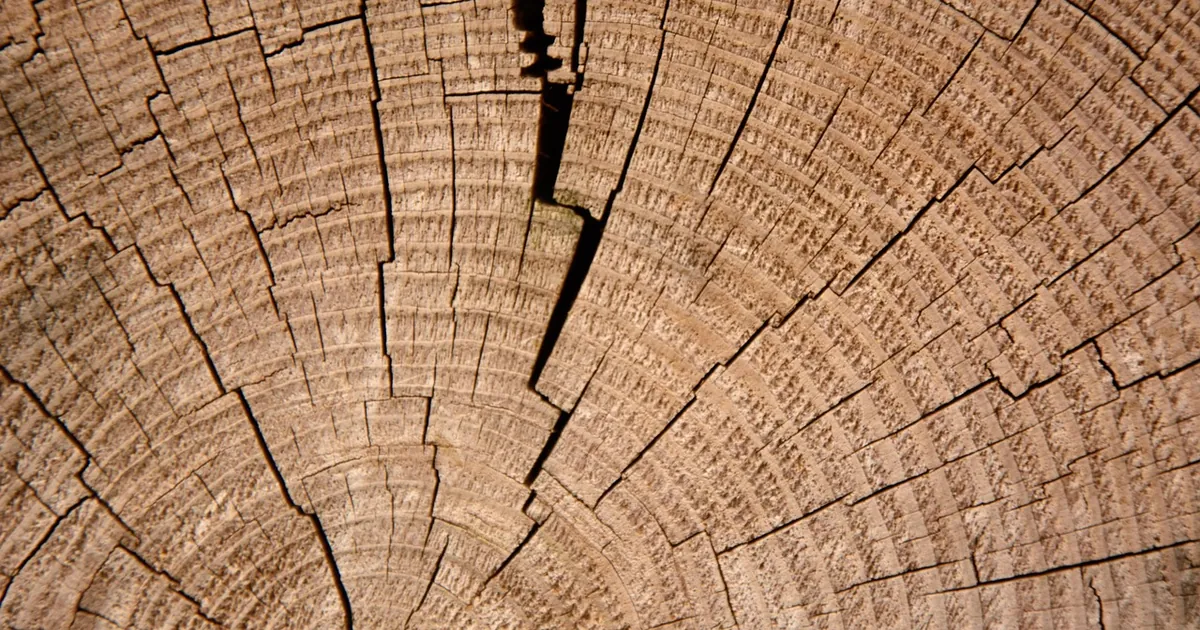
Every woodworker ends up with a mystery board: a slab from a neighbour's tree, a drawer front from a yard sale, a stack of old lumber in a barn. Identifying it is less magic than it looks. Wood scientists use a handful of clues in a set order, and you can use the same ones with a sharp knife and a cheap hand lens.
Here are the seven clues, in the order that saves the most time.
1. Start with a clean surface
Dirt, finish, stain and decades of oxidation hide almost everything. Before you judge anything:
- Plane or sand a small patch on a face that won't show. Fresh wood shows its true colour.
- Cut the end grain clean. A saw leaves torn fibres that hide the pores. Slice a thin shaving off the end with a utility knife or a razor blade, pulling at a low angle. A drop of water on the cut makes the pores stand out.
- Use daylight, not a warm indoor bulb, which shifts every wood towards orange.
Most of the clues below come from the end grain, so this step matters more than any other.
2. Pores or no pores: hardwood or softwood
Look at the clean end grain with a 10x lens.
- Hardwoods (oak, maple, walnut, cherry) have pores: the cut ends of tube-like vessels that carry water in the tree. They look like tiny holes or dots.
- Softwoods (pine, spruce, fir, cedar) have no pores. Their end grain looks like a smooth, even field of tiny cells. Pine, spruce, Douglas fir and larch also have resin canals, which show as scattered small dots, often with a bead of resin.
The names describe the tree, not the hardness: balsa is a hardwood, and some pines are harder than many hardwoods. We explain the difference in more detail in our guide to hardwood and softwood.
3. How the pores are arranged
This is the single most useful clue for hardwoods. Within each growth ring, pores follow one of three patterns:
| Pattern | What you see | Common examples |
|---|---|---|
| Ring-porous | A band of large pores at the start of each ring, then much smaller ones | Oak, ash, elm, hickory, chestnut |
| Semi-ring-porous | Pores shrink gradually across the ring | Black walnut, butternut, some cherry |
| Diffuse-porous | Small pores spread evenly through the ring | Maple, birch, beech, poplar, basswood, cherry |
So a pale board with big pores in each ring is likely ash or oak; a pale board with tiny, even pores is likely maple or birch.
4. Rays: the oak test
Rays are ribbons of cells that run from the centre of the tree outwards. In most woods they are too small to see, but in a few they are a giveaway:
- Oak has very large rays. On the end grain they look like bold lines crossing the rings; on a quartersawn face they show as the shimmering "fleck" of Arts and Crafts furniture.
- Beech and sycamore have smaller rays that show as many fine flecks on a quartersawn face.
- Ash looks like oak at a glance but has no large rays. That one check separates them.
Telling red oak from white oak takes a few more clues, which we cover in red oak vs white oak.
5. Colour, heartwood and sapwood
Colour helps, but it is the least reliable clue on its own:
- The heartwood (the inner, older wood) usually carries the species colour; the sapwood near the bark is paler. Walnut sapwood is nearly white, its heartwood chocolate brown.
- Light changes colour. Cherry darkens from pink to deep red-brown in months; walnut lightens towards a warm brown; many exotics like padauk fade from bright orange-red to brown.
- Look at fresh wood from your clean patch, and compare it with the colour of known samples in the same light.
6. Weight and hardness
Pick the board up. A dry board that feels heavy for its size points to a dense wood such as hickory, hard maple or a tropical species; a light one suggests pine, cedar, poplar or basswood.
For hardness, press a fingernail into the face. Pine, cedar and basswood take a dent easily; oak, maple and hickory barely mark. To compare species by number, use our free Janka hardness chart, which lists 81 woods from balsa to buloke.
7. Smell and other quick checks
Freshly cut wood often smells distinct:
- Eastern red cedar smells like a cedar chest or pencil shavings.
- Sassafras has a spicy, root-beer scent.
- Oak has a sour, vinegary smell, especially when wet.
- Pine and other resinous softwoods smell of turpentine.
A cheap UV torch helps with a few species: black locust glows bright yellow-green under UV light, which separates it from look-alikes such as Osage orange in some lights.
Put the clues together
No single clue settles it. A good routine:
- Clean patch and clean end grain.
- Pores? If not, it is a softwood: check for resin canals and smell.
- If pores, which pattern? Ring-porous, semi-ring-porous or diffuse-porous.
- Large rays? Then it is almost certainly oak.
- Use colour, weight, hardness and smell to pick between the last few candidates.
When you're stuck between two or three species, a clear photo of the face and the end grain is enough for an AI identifier to give you a likely match and a look-alike to check. Our free wood identifier does this in the browser, and the Wood Ai app keeps a record of every board you scan with its hardness, workability and best uses.
Frequently asked questions
What is the quickest way to identify wood?
Slice the end grain clean with a sharp blade and look at it with a 10x hand lens. The pore pattern alone separates oak, ash, maple, walnut and pine in seconds.
Can you identify wood from a photo?
Often, yes, if the photo shows clean, unfinished grain in daylight. An end-grain close-up is the most reliable. Old finish and stain hide the real colour, so sand a small patch first.
Why does the same wood look different from board to board?
Heartwood and sapwood differ in colour, growth speed changes the ring width, and the way a board is cut (flat, quarter or rift) changes the figure. Colour also shifts with light and age.
Do I need a microscope?
No. A 10x hand lens (a jeweller's loupe) is enough for most common woods. Labs use microscopes to separate close relatives, such as the different red oaks.